AI-powered answer engines are quietly becoming the starting point for how people research products, compare alternatives, and evaluate brands. The visitors they send are different from traditional searchers: they tend to arrive further along in their decision, pre-qualified by the AI that just explained your product to them.
Getting those mentions and referrals goes way beyond good SEO and rankings. It requires a different strategy altogether, and that strategy is called AEO.
What has actually changed in how people search
Traditional search presents a list of links and lets users decide what to click. AI search, on the other hand, does all the work for them. When someone asks ChatGPT a question, they’re not getting ten blue links – instead, they’re getting a synthesized answer, with maybe two or three references in the mix.
This means the user is no longer browsing, investigating, comparing sources. By the time they click through to your website, the AI has already done the explanation and comparison part of the process, and made a recommendation. That’s why the conversion data on AI-referred traffic is, in most contexts, significantly better than organic search, because visitors arrive with context and intent that organic search can rarely match.
To be precise about the numbers:
- A 2025 study found the average AI search visitor is 4.4 times as valuable as the average visit from traditional organic search, based on conversion rate.
- Another 2025 study found that AI visitors drove 12.1% of signups despite accounting for only 0.5% of total traffic, which means they convert 23 times better than traditional organic search visitors.
On a larger scale, as of late 2025, AI referral traffic accounts for roughly 1% of total web traffic across industries, with 87.4% of that coming from ChatGPT. The volume is still small: Google sends approximately 345 times more traffic than all AI platforms combined. But AI referral sessions grew 527% year-over-year in 2025, consistent with Gartner’s 2024 prediction that search engine volume would drop 25% by 2026 due to AI Chatbots and other virtual agents. So, the trajectory only points in one direction.
That said, context matters. In e-commerce, for example, a large-scale study of 973 e-commerce websites found ChatGPT referral traffic was ~0.2% of total sessions, so ~200× smaller than Google organic referrals. Where it really shines is B2B, consulting, legal, health, and other research-heavy categories where buyers do a lot of upfront evaluation before deciding. If you’re selling something that requires research and deliberation, AI-referred traffic is very likely your highest-converting channel, even if it’s still a tiny fraction of total visits.
What is AEO and how is it different from SEO?
Answer Engine Optimization is the practice of structuring your content so that AI-powered platforms can find, understand, and cite it when answering user queries. While Search Engine Optimization (SEO) tries to get you ranked on search engines like Google, AEO tries to get you referenced by AI systems.
The two aren’t in conflict – actually, they overlap in a lot of things – but they measure success differently. SEO success looks like rankings and clicks. AEO success looks like mentions and citations in AI-generated responses, even when no link is provided.
The other big difference is how AI systems decide what to trust. Google (and other search engines) weighs backlinks, domain authority, and keyword relevance. AI engines focus on consensus: they look for brands and claims that appear consistently across multiple independent sources. So, if your product appears not only on your website but in review platforms, Reddit threads, LinkedIn, or industry publications with consistent messaging, AI systems become much more confident citing you. If your information is inconsistent across sources, the AI may skip you entirely and cite a competitor’s community thread instead.
Here’s a quick comparison to get things even clearer:
| SEO | AEO | |
|---|---|---|
| Goal | Rank higher and drive clicks | Be mentioned or cited in AI-generated answers |
| Success metrics | Rankings, Click-Through Rate (CTR), impressions | Brand mentions, citations, AI referral traffic |
| What’s taken into consideration | Backlinks, domain authority, keywords | Multi-source consensus, content structure, trust signals |
| Content format | Keyword-optimized pages | Structured, self-contained, answer-first sections |
| Measurement tools | Google Search Console (GSC), Google Analytics 4 (GA4) | SE Visible, HubSpot AEO Grader, GA4 AI referral segments |
That said, AEO and SEO reinforce each other rather than competing. They share a lot of technical ground, and content you build for one tends to serve the other.
How AI decides what to cite
Modern AI search expands a user’s query into multiple sub-queries and synthesizes responses from several sources simultaneously. This is why comprehensive, structured content tends to outperform narrow posts. If your content only answers one specific angle, it gets picked up for that angle. If it addresses the broader topic from multiple angles, it has more chances to surface across different sub-queries.
AI systems also look for specific trust signals before citing a source. Research from the SEO platform SE Ranking found that sites with over 32,000 referring domains are 3.5 times more likely to be cited by ChatGPT than smaller sites. The study also found that domains with strong community presence on Quora and Reddit have roughly four times higher chances of being cited, and domains with profiles on Trustpilot or similar review platforms are three times more likely to get cited.
Traditional SEO authority and AI citation probability correlate, but not perfectly. A separate study found that about 28% of ChatGPT’s most-cited pages have zero organic visibility in Google, which means there’s a meaningful chunk of AEO territory that SEO doesn’t cover.
How to structure content for AI referrals
Since AI systems pull individual passages from your content or specific sections that answer a specific question, each section of your content needs to stand on its own, without requiring context from other sections to make sense.
Here are a few tips to make this happen:
-
Lead with the answer
The first 40-60 words of any section should directly answer the question that section’s heading implies. AI systems often extract just this opening passage, so presenting the answer upfront is critical.
-
Use question-based headings
Write headings the way people actually ask questions: “How do I…?”, “What’s the difference between…?”, “Why does…?”, etc. This matches both natural language queries and how AI systems interpret your content structure.
-
Prioritize lists, tables, and structured formats
Long paragraphs are harder for AI to extract. A table comparing two tools, a numbered list of setup steps, or a bullet-point breakdown of a concept is far more likely to get pulled into an AI answer. For definitions, comparisons, and how-to content in particular, structured formats dramatically improve your citation chances.
-
Keep each section self-contained
A reader (or AI system) who lands on section four of your article should be able to understand it without reading sections one through three. Define terms locally, give context within each section, and don’t assume your reader has followed everything above.
-
Include facts, stats, and specific claims
AI systems can quote or closely paraphrase specific data points from your content. Content that includes concrete numbers, defined parameters, or specific claims is much more extractable than vague claims.
Can AI actually read your content?
Tactics for content structure won’t help much if AI crawlers can’t access your content in the first place. Retrievability is the key in AEO: it means your content should exist in a format that AI systems can read without extra effort.
The main issue is usually JavaScript-rendered content. If your core text only appears after JavaScript executes, many AI crawlers will never see it. Your most important content should be in plain HTML that loads immediately.
Beyond accessibility, a few technical elements directly influence how AI systems perceive your content’s credibility, namely:
- Schema markup helps AI systems understand the structure and type of your content. FAQ schema, HowTo schema, Article schema, and Product schema all signal context that plain text doesn’t.
- Freshness signals matter too: displaying a publication date, a last-updated date, and an author name both on-page and in your structured data increases how much AI systems trust the recency and accountability of your information.
- Page speed and accessibility are technically important too, since both crawlability and user experience feed into the overall trust calculation of AI systems.
Off-site presence: why your website is not enough for AEO
AI systems deliberately seek out consensus across independent sources before confidently recommending a brand. So, a brand that only appears on its own website, no matter how well-structured that website is, doesn’t generate the multi-source signal that gives AI the confidence to cite it.
That means your AEO strategy needs to go beyond your owned channels. For example, your brand needs to be contributing to Reddit discussions, getting listed and reviewed on Trustpilot, appearing in relevant industry publications, and engaging on LinkedIn. User-generated content – like reviews, forum posts, community discussions – carries particular weight because AI systems treat community consensus as a strong trust signal.
Authenticity is key here. Thin or manufactured presence doesn’t build the kind of consistent, multi-source signal that helps. The goal is to appear in the places where people in your market naturally discuss problems and compare solutions, with messaging that stays consistent with what your website says.
How to measure your AEO performance
The first step is isolating AI referral traffic in GA4 by creating a custom channel grouping that captures sessions from ChatGPT, Perplexity, Gemini, and similar sources. Without this, AI traffic gets lumped into “referral” or sometimes misattributed as direct traffic.
Here’s the step-by-step:
-
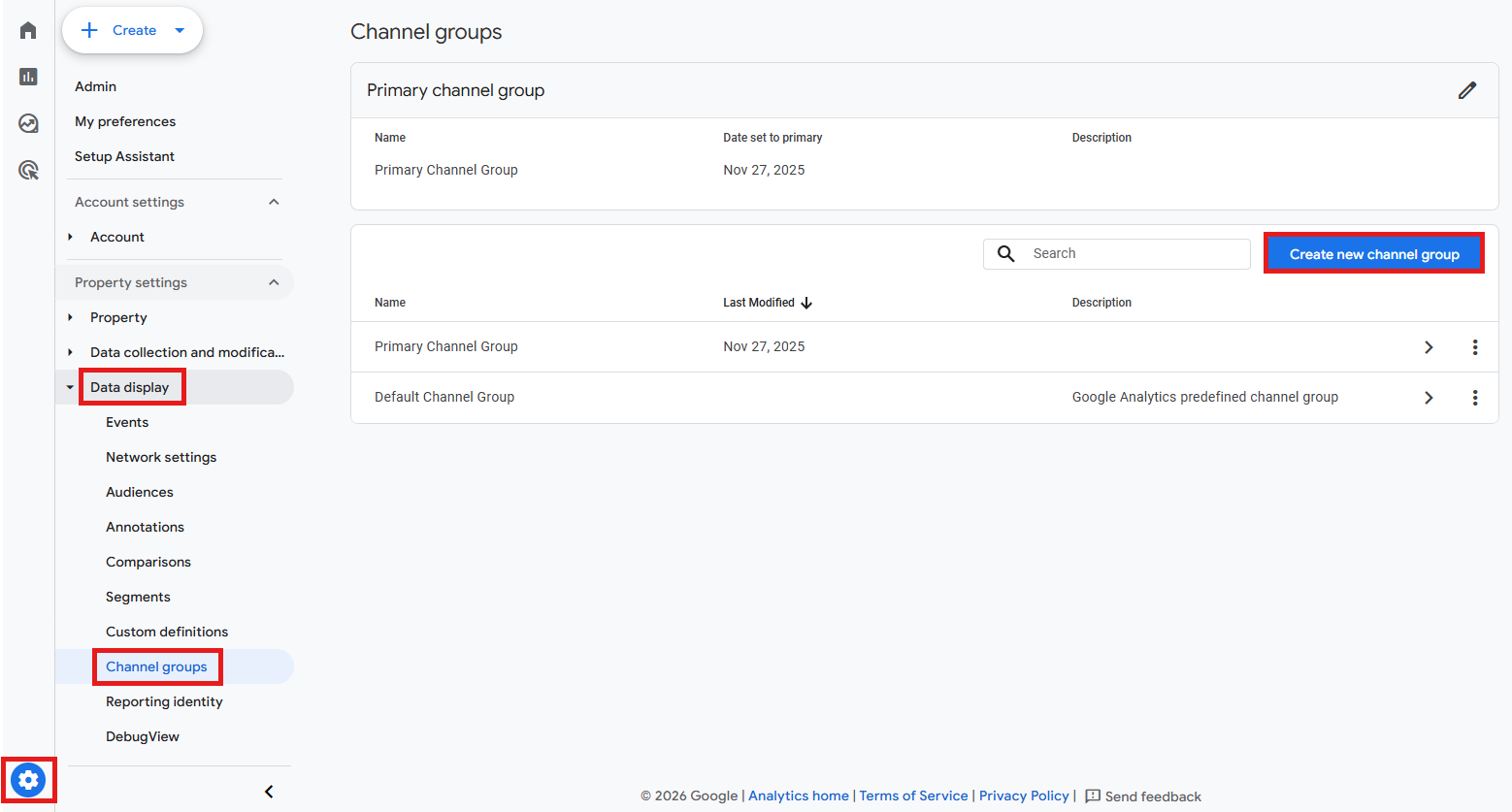
In GA4, go to Admin > Data display > Channel groups > Click Create new channel group. GA4 will automatically pre-populate it as a copy of the default channel group, so all your existing channels are already there.
-
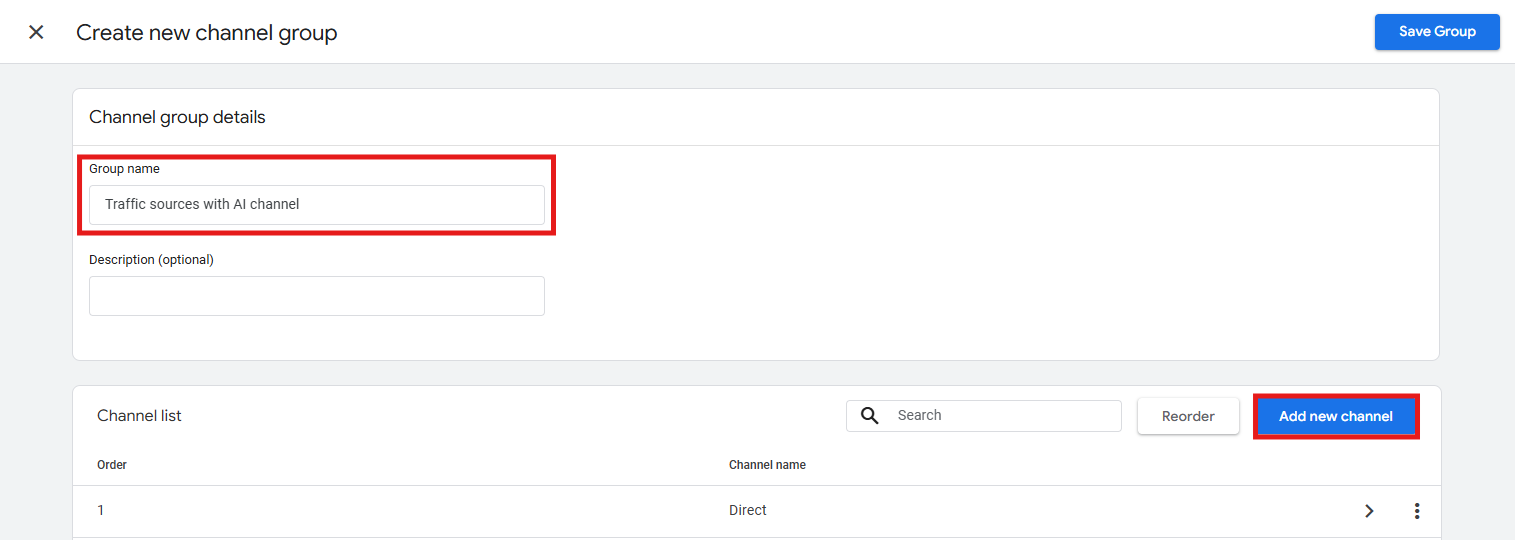
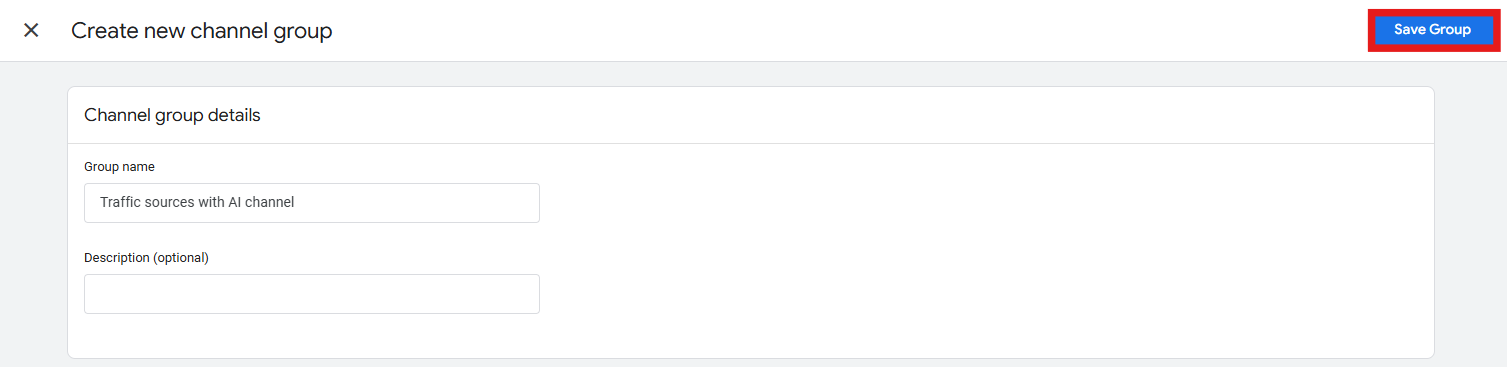
Give it a clear name, for example: “Traffic sources with AI channel”, and optionally add a description. Then click Add new channel at the top of the channel list.
-
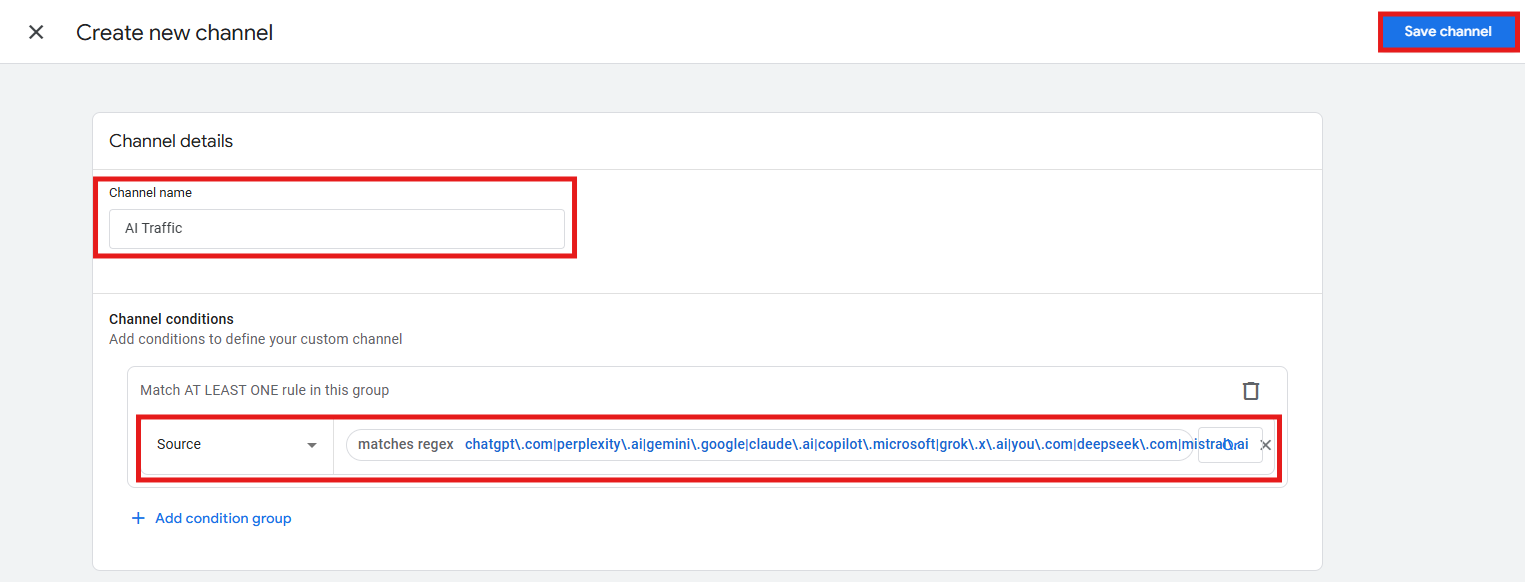
Name it something like “AI Traffic” or “AI & LLM”. Under Condition, set the dimension to Source, the match type to matches regex, and paste in this pattern:
chatgpt.com|perplexity.ai|gemini.google|claude.ai|copilot.microsoft|grok.x.ai|you.com|deepseek.com|mistral.ai
This captures all the major AI platforms currently sending meaningful referral traffic. Click Save channel to confirm.
-
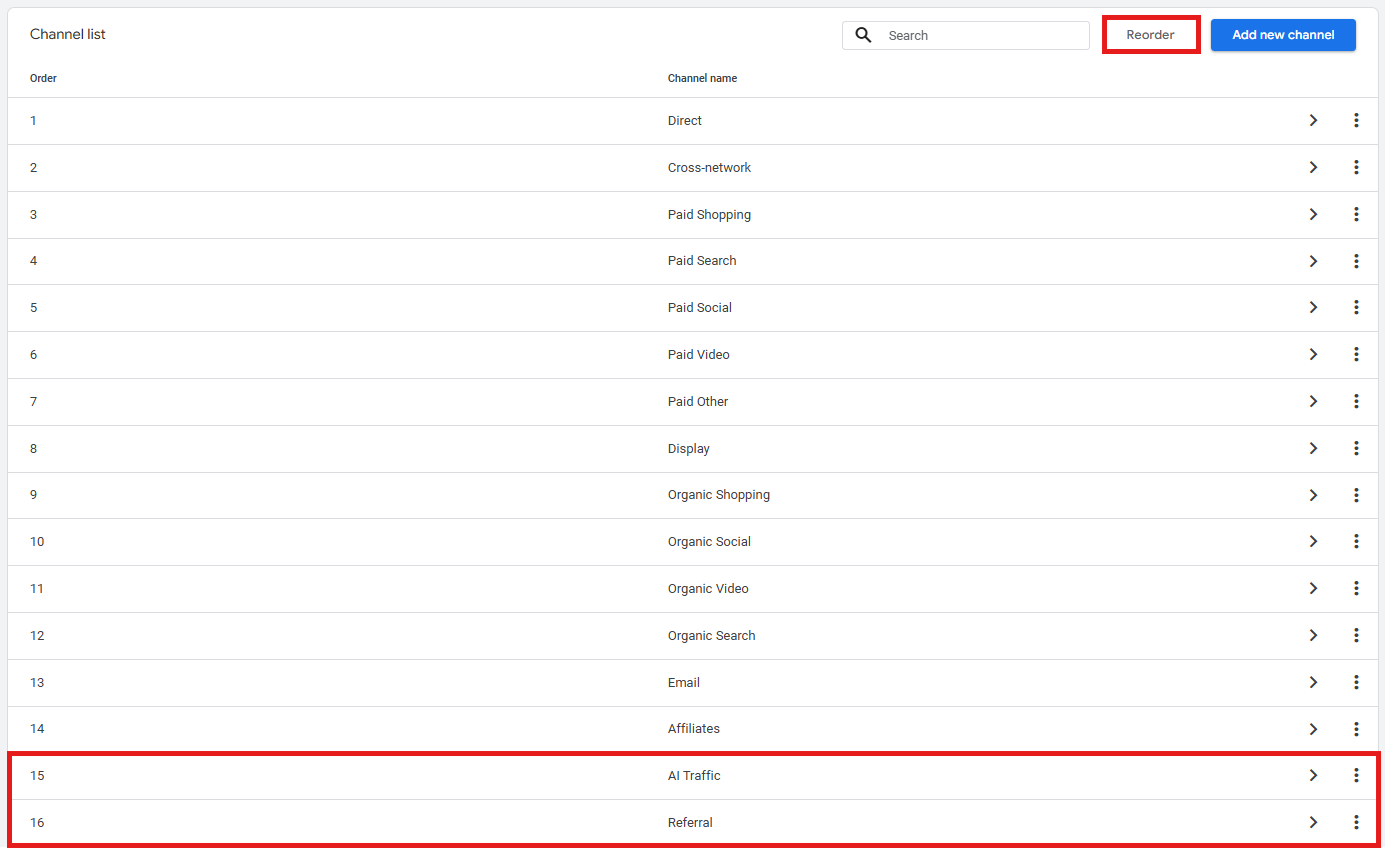
Now you have to reorder the channel. GA4 assigns traffic to channels in waterfall order (top to bottom) and stops at the first match. Since AI platforms send referral traffic, your new “AI Traffic” channel needs to sit above the generic “Referral” channel in the list. So, click Reorder, then drag the AI Traffic channel up above Referral. Click Apply.
-
Click Save Group in the top-right corner to finish the process.
-
To view your AI referral data, go to Reports > Acquisition > Traffic acquisition. At the top of the data table, click the dimension dropdown and switch it to your new custom channel group. You’ll see “AI Traffic” as its own line item showing sessions, users, engagement rate, and key events, including retroactive historical data.
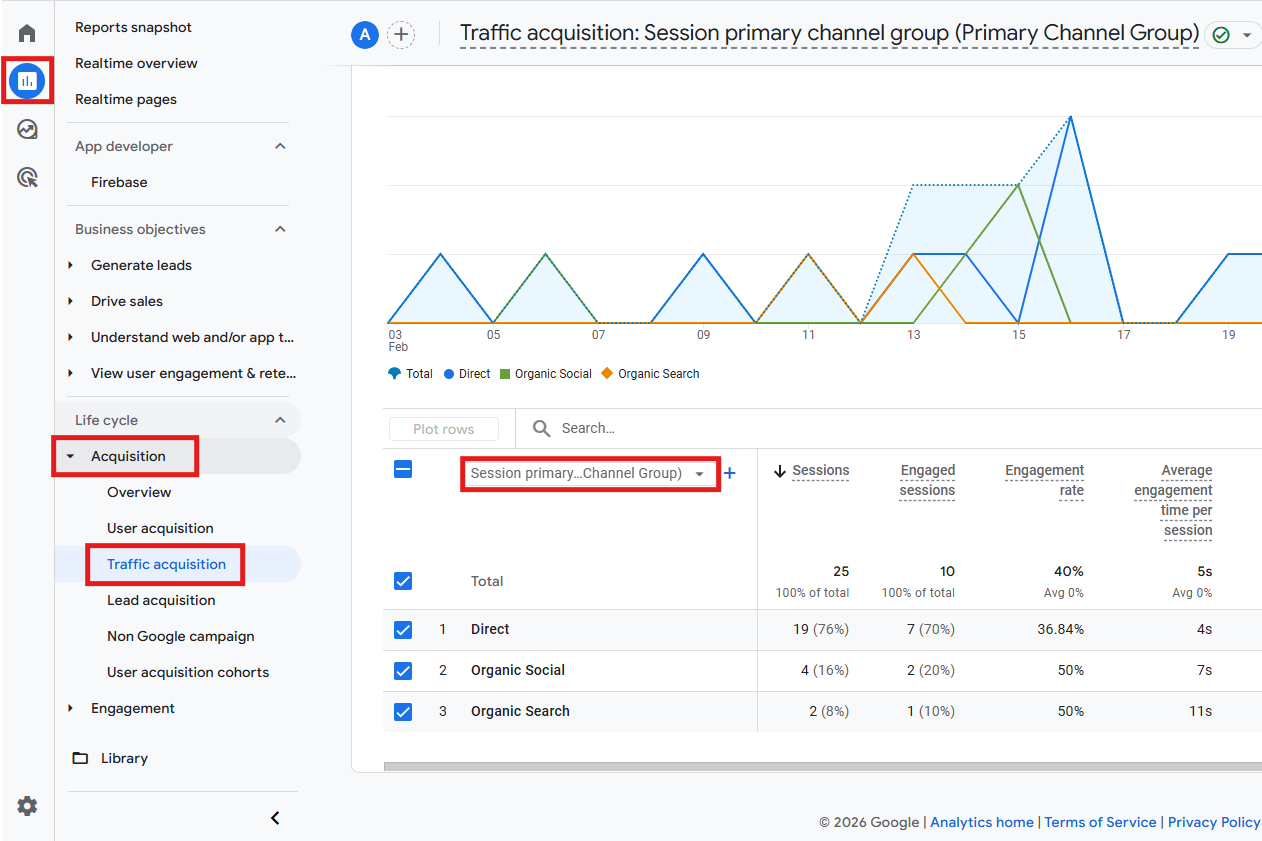
Keep in mind: you need at least Editor access on the GA4 property to do this. Custom channel groups apply retroactively to historical data, so you’ll see past AI referrals as soon as you save.
Once you can see AI referral sessions, compare their conversion rate against organic search over the same period. Track which pages receive the most AI traffic – they’re likely your most citable content.
Keep in mind that AI recommendations are highly inconsistent. Research suggests there’s less than a 1-in-100 chance that ChatGPT or Google’s AI gives you the exact same list of brands in any two responses to the same query. So, treat AEO performance metrics as directional rather than precise, and measure trends over time to help you decide next steps.
Tip: for monitoring where you appear in AI answers, tools like SE Visible and HubSpot’s AEO Grader track brand mentions and citations across major AI platforms.
GA4 vs. GA4 360: which one do you need for AEO tracking?
AI referral traffic is a small-volume channel (roughly 1% of total sessions), which means it often behaves like a niche segment in your analytics. And niche segments are exactly where GA4’s standard limits start to waver.
The core issue is data sampling in Explorations. Standard GA4 samples data when an exploration report queries more than 10 million events. If you’re running a high-traffic website and you build a custom exploration to analyze AI referral sessions, your report could be sampling a large underlying dataset to surface a very small segment, so the sampled result may not accurately represent that tiny slice.
GA4 360 raises the sampling threshold to between 100 million and 1 billion events, making unsampled segment analysis much more reliable.
Here’s a summary of the differences that matter most for AEO measurement:
| Standard GA4 | GA4 360 | |
|---|---|---|
| Exploration sampling threshold | 10 million events | 100M–1B events |
| Unsampled reports | Not available | Available |
| BigQuery export limit | 1 million events/day | Billions of events/day |
| Data retention (explorations) | Up to 14 months | Up to 50 months |
| Subproperties / rollup properties | Not available | Available |
| SLA | None | Yes (data collection, processing, reporting) |
| Cost | Free | From ~$50,000/year |
For AEO measurement specifically, the most relevant differences are:
-
Exploration sampling
If your site gets significant traffic and you’re trying to isolate a segment that represents under 1% of sessions, there’s a real risk that sampled explorations give you a noisy and unrealistic picture. With GA4 360’s higher threshold, you’re working from the full dataset.
-
BigQuery export depth
Standard GA4 caps BigQuery export at 1 million events per day. For most sites focused on AEO analysis, this won’t be the binding constraint but if you want to run detailed BigQuery queries comparing AI referral session behavior against your entire event dataset, high-traffic sites can hit this ceiling on the underlying export, not the segment itself.
-
Data retention
Standard GA4 keeps exploration data for up to 14 months. GA4 360 extends this to 50 months. AEO is a trend you’ll want to track over a multi-year period as AI search grows, so losing historical exploration data at 14 months will make it harder to benchmark how your AI visibility has evolved.
That said, standard GA4 is the right starting point when AI referral volumes are still low enough that sampling in explorations isn’t a daily problem. GA4 360 becomes worth considering when you’re running high-traffic properties and need unsampled segment analysis, or when you need the BigQuery depth to do cross-channel attribution modeling at scale.
The bottom line
As of right now, Google still drives the overwhelming majority of search and that’s not going to change overnight. But AI-referred traffic is growing fast, and converting well enough in most B2B and research-driven contexts to justify treating it as a real channel.
Our advice? Brands who want to be in the strongest position in a couple of years should be building both foundations now: maintaining strong traditional SEO while structuring content and building off-site presence in ways that AI systems can trust and cite.